Friday, 30 August 2013

Micro Time


The sun came out and so it was time to go and take a look round my favorite RSPB reserve. I decided that it would be great to look at all the micro wildlife that we tend to miss. I have become quite fascinated by the different insects that over the years I have ignored. Spiders, wasps, hoverflies and many others that I did find scary!

So to start us off here are some of my favorites. These were taken along the Woodland trail path that leads to you to the Fisher's Mill Bridge. For those that don't know the area click here and it will take you to the map of finding your way round the reserve.

Whilst to some they are very creepy, they do play an important role in nature. Fly's, which I must admit I am not a big fan of, are useful in the right conditions. But, if they get out of hand then they can cause many health problems.

I have discovered that the common green bottle fly (Lucilia sericata) seen here plays an important role in forensic and medical science. In forensic science they can use the maggots to relate to the time of death. How they do it is linked to when the fly lays their eggs in the exposed wound or a body that is decomposing. They have also used maggots for medical situations where there is a serious infection. By placing the maggot in the infected area it will devour the infection. Although please don't try this at home!!


Green bottle fly  -Lucilia sericata
The little chap below is a Flesh fly - sarcophaga carnaria. Like the green bottle they are very common in the UK. Plus they love anything that is decomposing, such dead animals,  faeces or any meat base food. They will use these as a food source for their eggs to ensure their survival. They can lay around 500 eggs in between 75 to 150 batches during a four day period.That's a lot of flies gulp.

Flesh fly - Sarcophaga carnaria
Look out for these quick darting hoverflies. They will move quickly from one plant to another looking for nectar or pollen.
Common Hover Fly Syrphus ribesii           

Dolichovespula Saxonica  -Wasp


I have always been wary of wasps, but I learnt you just need to respect and not panic when they buzz round you. Did you know that that in 1987 the first British record of this wasp was reported, it was spotted near Dorking, Surrey. Not many people know that!

Dolichovespula Saxonica - Wasp

If you love spiders, then do keep an eye out for hidden ones, they will make their spider web amongst the leaves, this way they can trap any moving insects for their supper, stay safe and sheltered


Spiders will often be found lurking in plants, so look out for their webs. I found this one by peering under the leaf, but I could not get that close with my camera, so the picture is a little on the small side.


This is the same spider, but not taken by me. Cheers Tony Bucknall.

You will also see little snails that have crept up the stem of plants, either resting or eating their chosen preferred plant. In gardens they can destroy many plants although, there are many ways of preventing this. One suggestion is to put comfy leaves around plants, this will encourage the snails to eat these leaves instead of the ones you wished they didn't.  

Snails are an easy meal for some predators like leeches, beetles, and caterpillars. Including frogs, toads, snakes and some birds, such as ducks and geese. Snails must keep moist and so you will find that they spend a lot of time inside their shell. So don't always mistake them for sleeping.

Snail
Snail
One of my all time favourites as a child and I still get a lot of joy when I see them, is the Ladybird. Their bright colour of red will put some predictors off and if a predator does try to eat one they will soon get a bad taste in their mouth. 


They secrete a substance over their body that will leave a bad taste in the mouth of the opportunist. However,  swifts and swallows seem to be immune to this substance and will feed on the wings of ladybirds.


This is a yellow harlequin (succinea) ladybird. Up until 2010 it was in decline in the United Kingdom and it now seems to be making a come back.


Over by the Fishers Miller Pond I saw a small selection of butterflies making the most of the warm weather. like the yellow harlequin, the comma butterfly is making a comeback. In the 20th century it was almost in decline. So it's good to see another butterfly on the increase.
Comma - Polygonia c-album

Meadow Brown- Maniola jurtina looking a little worn out

Possibly a Svensson's Copper Underwing Amphipyra berbera ?
Not a 100% sure that this is a Svensson's Copper Underwing, looks very similair to a Copper Underwing, so the jury is out. If anyone knows then do let me know on here.


The range of flowers were also a sight for sore eyes and this is just a small collection


Whilst to some these may look like weeds they play an important role by helping our wildlife. Many beneficial insects rely on plants for nectar and pollen or shelter. If you plant wildlife flowers in your garden then you can attract insects that will act as a natural pesticide. Worth thinking about.


It has also been recorded that over the past 50 years declines have been noted in many groups of British insects, such as common butterflies, moths, bees and hoverflies  that need certain flowers to survive. So we do need to plant more.


One of the main reasons  that wild flowers are being destroyed is due to new building complexes being built all over the UK.

 Many plants need to have insects to pollinate so the flowers can become fertilised. If the insects are in decline this will have a knock on effect on wild flowers.
To attract the insects the flowers must provide food. They have two rich sources - nectar and pollen.

The nectar is a source of energy containing sugars. The pollen grains contain the much needed proteins and oils they will use for growth.

So you can see both do help each other. Without flowers no insects and without insects, no flowers.


I cannot finish without putting up one of my favourite spots. Over by the heronry there is a bird feeder and you will see various birds, such as the blue tit, greenfinch, goldfinch flying in and out to snack on the food put out for them. Here are a few of my favourites.


"Primates need good nutrition, to begin with. Not only fruits and plants, but insects as well"
                                                                                           Richard Leakey


References

Allen, G. W., and Archer M. E.  (1989) Dolichovespula saxonica (Fabricius, 1793) (Hym., Vespidae) found in Britain with a key to British Dolichovespula. Entomologist’s Monthly Magazine, Volume  125, p. 103-105.

BioExpedition (ND) Lady Bug the facts. accessed [25.08.13] http://bioexpedition.com/lady-bug/

Butterfly Conservation (ND) Comma [accessed 30.08.13] http://butterfly-conservation.org

Entomology and Nematology (ND) Common green bottle fly. accessed [24.08.13] http://entnemdept.ufl.edu/creatures/livestock/flies/lucilia_sericata.htm 

 Entomology and Nematology (ND) Urban Flies Musca domestica Linnaeus  accessed [30.08.13]http://entnemdept.ufl.edu/creatures/urban/flies/house_fly.htm


Phillips A & Roberts in Bees, Wasps & Ants Recording Society (2013)  Anthophora plumipes. Accessed [25.08.13] http://www.bwars.com/index.php?q=bee/apidae/anthophora-plumipes.

Rueda LC, Ortega LG, Segura NA, Acero VM, Bello F. 2010. Lucilia sericata strain from Colombia: Experimental colonization, life tables and evaluation of two artificial diets of the blowfly Lucilia sericata.Biol Res ;43(2):197-203

 Bennett SM (2006) Musca domestica  (The Common Housefly)

Snail world (ND) Information and facts about snails accessed [25.08.13]  http://www.snail-world.com/

UK Safari (ND) Flesh Flies. accessed [24.08.13] http://www.uksafari.com/fleshflies.htm

UK Ladybirds (ND)  Ladybird species in the U. accessed [25.08.13] http://www.ladybird-survey.org/species_list.aspx

Halstead A  in RHS (ND) Plants for pollinators. accessed [30.08.13]   http://www.rhs.org.uk/Gardening/Sustainable-gardening/Plants-for-pollinators


Saturday, 27 July 2013

It's Butterfly time


What a glorious July it has been so far, the butterflies are starting to emerge more and more. So we ventured off to our favourite RSPB spot, Middleton Lakes. We were not disappointed. We spent a few hours exploring the marsh area opposite the main car park and saw many Large Whites, the one below is possibly a female, since there are double spots on the fore-wing.


Sometimes you may mix these up with a Green-veined white, because both have a black tip and generally they only have one one black spot.  To really tell the difference, you need to look under the wing. The Green-veined butterfly has prominent greenish veins on hind wing.


Large White - Pieris brassicae
Female Large White-veined Pieris brassicae

Green-veined white - Pieris napi

This one is a Green-veined white, as you can see there are dark prominent greenish veins on the hind wing.


As we walked through the meadow we came across other wonderful butterflies along with a day time moth called British burnet moth.


We have a Comma, a scruffy looking Peacock and a Peacock that is displaying its beautiful colours.
Peacock displaying its colours


Scruffy looking Peacock
For anyone that is interested in Butterflies then click here to read the state of UK Butterflies. This has been put together by the Butterfly Conservation Group.

My particular lucky find was the  six spot Burnet. This is a day time moth and I had never see one before,  so I was very pleased to spot him. They particularly like thistles so if you walk past any keep an eye open. They must have six spots if you see five then that is something else.


British burnet moth


British burnet moth

We took a walk down by the river and I was pleased to capture these pond insects. I think they are called Pond Skaters. I have discovered that they use their legs to move across the pond’s surface. They are common and widespread throughout the UK. 


Pond Skater


Pond skaters can be found on most stretches of still or slow-moving freshwater. They have wings and are good fliers. In autumn they fly away from water to hibernate, emerging again in late April.


We could not end our visit without popping down to the Lake and were not disappointed to see these Terns. They gave a wonderful display.


.


Of course not forgetting the Moorhen.


All of the Black Headed Gulls had gone.  I thought it was quiet, they are a noisy bunch and I am sure the other residents were enjoying the peace!

“If we can teach people about wildlife, they will be touched. Share my wildlife with me. Because humans want to save things that they love.”  - Steve Irwin


References 

 Butterfly Conservation (ND)Large White [accessed 26.07.13]http://butterfly-conservation.org/679-605/large-white.html

Fox, R., Brereton,T.M., Asher,J., Botham,M.S., Middlebrook,I., Roy,D.B. and Warren, M.S.(2011).The Sate of the UK's Butterflies 2011. Butterfly Conservation and the Centre for Ecology & Ht.

Pond Conservation (ND) What wildlife is in your pond. [accessed 26.07.13] http://www.pondconservation.org.uk/advice/What+wildlife+lives+in+a+pond

The RSPB (ND) Terns [accessed 26.07.13]http://www.rspb.org.uk/wildlife/birdguide/families/terns.aspx

Monday, 1 July 2013

One Sunny day in June

The sun came out and warmed up everything. It was a lovely surprise! I mean we cannot say we have had a flaming June now can we. So we packed our cameras and bins and headed for our favourite RSPB reserve, well one of the many, Middleton.

We walked to the Heron section of the reserve. At the moment it's difficult to see them in the trees, but trust me they are there. Quite a lot of noise was coming from their quarters. Difficult to make out why and also, difficult to spot the herons nesting, but one did pop up and extended his wings. Lovely sight and had the opportunity to photograph one flying over. This is one I took as he flew towards the main reserve area. Quality not brilliant, since I was not quick enough, but hey ho. Such graceful birds. I love to watch them fly and how they land in the trees is amazing.
Heron flying over the reed pond.
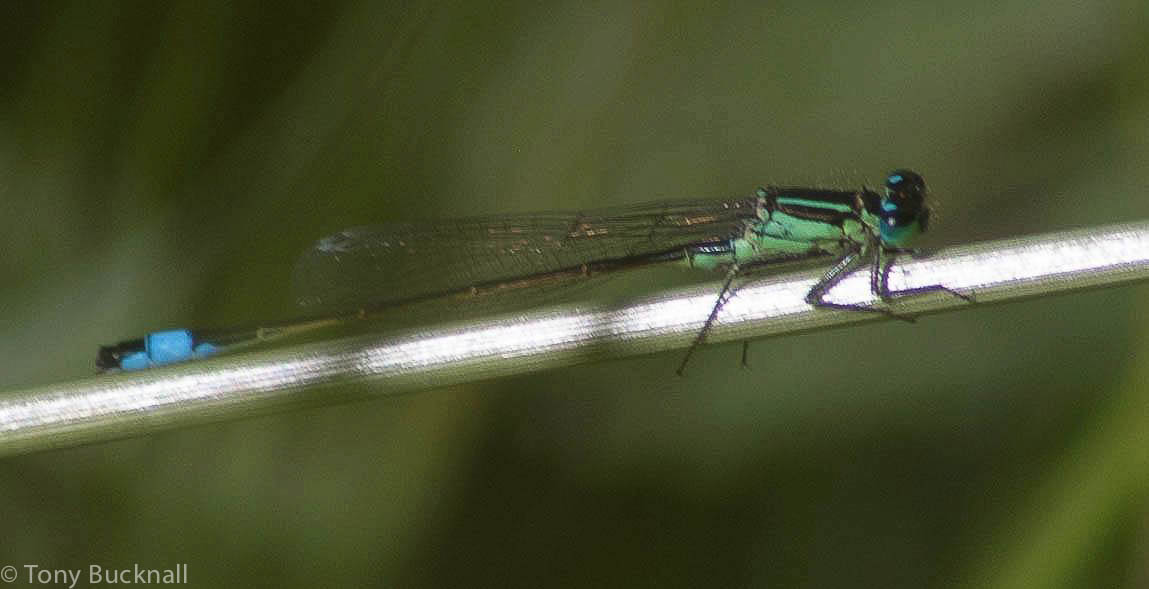
We also saw blue and red damselflies by the heron section. Here they are courtesy of Mr Tony Bucknall, thank you Tony.

Enallagma cyathigerum

Common Blue Damselfly
Ischnura elegans

Blue-tailed Damselfly
Pyrrhosoma nymphula

 Red Damselfly

A Common Blue-Damselfly pair in copulation wheel
Enallagma cyathigerum

Common Blue Damselfly

As you walk around the area, you do see a lot of the Common Blue Damselflies, so do watch were you are walking.  Damselflies are very closely related  to dragonflies (Anisoptera). They can be be distinguished from each other by observing them at rest. The damselflies are generally smaller and at rest hold their wings vertically above their body, or partly open. The dragonfly will always rest with its wings spread horizontally. It is very easy to get the two mixed up.

Around the heron section we saw a lot of Swallows, and I am pretty sure there were a good number of juveniles, I thought at first they were swifts, but on closer inspection I am pretty sure they were juveniles. Over by the bird feeder we had the usual Greenfinch, Chaffinch, Reed bunting and Sparrow.
.


Not many butterflies despite the warm sun.. Saw just two types a Wood White and this little chap, which I believe is a Speckled wood, if I am wrong please do let me know.

Pararge aegeria  Speckled Wood


As we walked towards the main reserve lake we came across these little critters. We do tend to forget about bees and little beetles, since they are small, but they do play an important role in our environment. We all know that bees play a part in pollination,but less well known ones include moths, thrips, beetles and solitary bees.

 Did you know;
 At least 65% of all species on the planet are invertebrates. There are more than 32,000 terrestrial and freshwater and 7,000 marine species in the UK alone, and many are critically endangered.
I am trying to get these identified (ID), since I am not sure, yet what they are, if you recognise them, please feel free to let me know.


We also came across these peacock caterpillars.If you didn't know these love nettles and will grow into beautiful peacock butterflies. The female is very careful where she will lay the eggs in a silken tent on the tip of a vigorous nettle in full sun. The eggs will eventually get larger and tend to stay in a mass, as shown below.  You can see that they have protruding spines that can help defend against predictors. Those that survive will leave the nettles to pupate and approximately 12 days or so will emerge. So in late summer we may hopefully see them flying around the reserve.


Unfortunately, despite hearing so many different bird sounds, I was not able to take photos of any apart from this one chap, who was making a lovely bird song and he was visible.


 It is the lovely Reed Bunting and if you click here you will hear the sound he was making.

 One of the most noisy birds was the Chiffchaff, and wherever we walked I heard the distinct sound of them. Click here to listen to their song. I knew there were Whitethroats at the reserve and so far they have eluded me, but I did hear them and this is their song

So, despite hearing these two birds, plus others that I cannot recall we decided to wonder over to the main lake. The main birds that live here are the Black Headed Gulls. You will see that their head is brown, but because in some light it looks more black they were named the Black Headed Gulls. Its scientific name is Chroicocephalus ridibundus, although in some bird books you will see the name Larus Ridibundu. The word Larus is the birds classification and you will find other Gulls that have this prefix to their name. This changed some time ago when it was deemed this word was linked too to many other birds, so it was changed to the genus name of Chroicocephalus.


Black-Headed Gull


Juvenile Black-Headed Gull


Amongst the adults we saw many juveniles, which look nothing like their parents.I must admit I was quite excited thinking I had spotted a new wading bird, but alas it was not to be, as I asked my bird buddies to ID the bird and I was quickly told  "it is a Black-Headed Juvenile".


Black-Headed Gulls - Juvenile


They weren't the only youngsters on the lake here we have a Mum and young ones enjoying the sun.


You of course cannot ignore the Tufted Duck, here we have Mr and Mrs Tufted Duck. Mrs Tufted duck spent most of her time diving in, with Mr Tufted Duck just looking on.

Male and Female Tufted Duck

Male and Female Tufted Duck

Male and Female Tufted Duck


Finally, a favourite of all, the muted  swan towering over the Black-Headed Gulls...

OK Guys, move over.

“The only good cage is an empty cage.”
― Lawrence Anthony, The Elephant Whisperer

References

Buglife (ND)  - The Invertebrate Conservation Trust http://www.buglife.org.uk/ [accessed 1.7.13]

Funk, D. J., and Omland, K. E. (2003). Species-level paraphyly and polyphyly: Frequency, cause and consequences, with insights from animal mitochondrial DNA. Annu. Rev. Ecol. Evol. Syst. 34: 397–423.

RSPB (ND) Reed Bunting.  http://www.rspb.org.uk/wildlife/birdguide/name/r/reedbunting/index.aspx [accessed 01.07.13] 


RSPB (ND) Bird Guide.http://www.rspb.org.uk/wildlife/birdguide/name/b/blackheadedgull/index.aspx [accessed 01.07.13]

Royal Entomological Society (ND) Dragonflies (Anisoptera) and Damselflies (Zygoptera) http://www.royensoc.co.uk/insect_info/what/dragonflies_and_damselflies.htm [accessed 01.07.13]

The British Dragonfly Society (ND) UK Species zygoptera - Damselflies. http://www.british-dragonflies.org.uk/content/zygoptera-damselflies [accessed 1.7.13]

Cone (ND) Butterflies of the nettle patch http://www.nettles.org.uk/nettles/wildlife/butterflies.asp [accessed 1.7.13]